Dear UKPN members,
The UKPN are partnering with Pint of Science to deliver a 1-night event during Polar week March 2018 (March 19-23). The event will be similar to the Pint of Science, but will have the focus of Polar science, and communicating polar science to the public.
The event will be held in 3 of the following cities; Southampton, Bristol, Cambridge, Sheffield or Edinburgh. However, for this event to be successful we need volunteers. If you are interested in being involved in helping to organise this event, please respond to this email and let us know which city you would be willing to help in!
We have the assistance of members from the UKPN committee and the Pint of Science executive team! It should be a great experience, and we hope our volunteers will also be involved with showing some experiments to demonstrate polar concepts, be a part of a "meet a polar scientist" or even be a speaker themselves at the event!
If you have any questions, please let us know.
Best,
Kyle Mayers
UK Polar Network Vice-President
Saturday, January 20, 2018
Friday, January 19, 2018
Upcoming Metabolomics Training Courses - Environmental
Good morning all,
We have a few courses coming up which you may be interested in:
Introduction to Metabolomics for the Environmental Scientist
30-31 January 2018
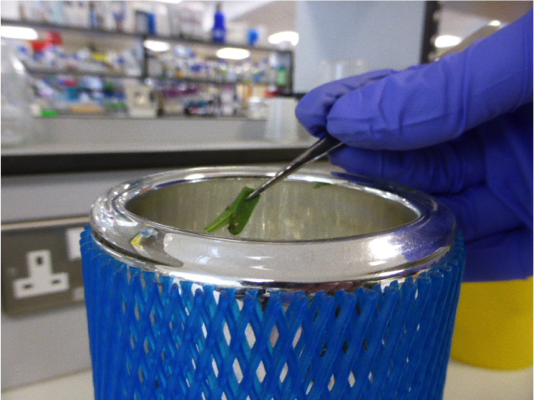
This 2-day NERC-funded Advanced Training Short Course will provide environmental scientists with an overview of the metabolomics pipeline. The course is intended for environmental scientist with little or no previous experience of metabolomics and who are interested to discover how this relatively new and powerful approach could be integrated into their research. Experts working in the NERC Metabolomics facility-NBAF-Birmingham will teach the course.
Topics covered:
Introduction to environmental metabolomics with case studies Experimental design and quality control Sample collection and preparation Overview of analytical laboratory techniques (mass spectrometry and NMR spectroscopy) Overview of data processing and statistics for metabolomics Introduction to metabolite identification
Registration for NERC funded scientists: While this course is open to all researchers with an interest in the environmental sciences, it is a NERC-funded Advanced Training Short Course and hence priority will be given to NERC funded scientists; this includes NERC PhD students (highest priority), NERC PDRA's and Fellows (next highest priority) and principal and co-investigators who currently hold NERC funding. For these prioritised applicants, bursaries are available to cover the full cost of the course and one night of accommodation (which we will book for you) and up to £100 towards travel costs (which you should book).
Introduction to Metabolomics for the Microbiologist
21-23 March 2018

This three-day course will introduce the attendees in how untargeted metabolomics can be applied to study microbial systems in academic and industrial research. The course will provide an overview of the metabolomics pipeline from experimental design to sample preparation and data acquisition to data analysis/interpretation. The course will be led by experts in the field of metabolomics and will include lectures, hands-on laboratory sessions in sample preparation and data acquisition and computer workshops focused on data processing and data analysis.
Topics covered:
Introduction to metabolomics, both targeted and untargeted approaches Experimental design and the importance of quality control samples in untargeted metabolomics Analytical strategies applied in metabolomics with a focus on mass spectrometry Hands-on laboratory sessions focused on sample preparation and to include metabolic quenching and extraction procedures, intracellular and exometabolome samples and polar and non-polar extraction methods Hands-on laboratory sessions focused on sample analysis for untargeted metabolomics studies using an Acquity UPLC coupled to a Xevo QToF mass spectrometer Hands-on workshop focused on data processing and data analysis Hands-on workshop focused on an introduction to metabolite identification Question and answer session with the experts
If you have any questions or queries about these courses, the centre, or any other metabolomics training, please do not hesitate to get in touch at bmtc@contacts.bham.ac.uk
All the best,
David Epps
Research Support Administrator
University of Birmingham
d.epps@bham.ac.uk

We have a few courses coming up which you may be interested in:
Introduction to Metabolomics for the Environmental Scientist
30-31 January 2018
This 2-day NERC-funded Advanced Training Short Course will provide environmental scientists with an overview of the metabolomics pipeline. The course is intended for environmental scientist with little or no previous experience of metabolomics and who are interested to discover how this relatively new and powerful approach could be integrated into their research. Experts working in the NERC Metabolomics facility-NBAF-Birmingham will teach the course.
Topics covered:
Registration for NERC funded scientists: While this course is open to all researchers with an interest in the environmental sciences, it is a NERC-funded Advanced Training Short Course and hence priority will be given to NERC funded scientists; this includes NERC PhD students (highest priority), NERC PDRA's and Fellows (next highest priority) and principal and co-investigators who currently hold NERC funding. For these prioritised applicants, bursaries are available to cover the full cost of the course and one night of accommodation (which we will book for you) and up to £100 towards travel costs (which you should book).
Introduction to Metabolomics for the Microbiologist
21-23 March 2018
This three-day course will introduce the attendees in how untargeted metabolomics can be applied to study microbial systems in academic and industrial research. The course will provide an overview of the metabolomics pipeline from experimental design to sample preparation and data acquisition to data analysis/interpretation. The course will be led by experts in the field of metabolomics and will include lectures, hands-on laboratory sessions in sample preparation and data acquisition and computer workshops focused on data processing and data analysis.
Topics covered:
If you have any questions or queries about these courses, the centre, or any other metabolomics training, please do not hesitate to get in touch at bmtc@contacts.bham.ac.uk
All the best,
David Epps
Research Support Administrator
University of Birmingham
d.epps@bham.ac.uk

Wednesday, January 17, 2018
FW: FUNDING: Antarctic Science Intl. Bursary
Hiya
Maybe useful to phd or post docs trying to do something that is an extension of their current project
Anna J
Dr Anna Belcher
Ecological Biogeochemist
British Antarctic Survey
Cambridge
From: Pereira-O'Callaghan, Ana G.
Sent: 17 January 2018 09:57
To: BAS Early Career Researchers Group <basecr@nercacuk.onmicrosoft.com>
Subject: FUNDING: Antarctic Science Intl. Bursary
Antarctic Science International Bursary
Funding is offered internationally to young scientists working in any field of Antarctic science.
Eligibility Criteria
To be eligible applicants must be studying for a PhD or be employed as an early career researcher. There are no nationality or residency restrictions. Early career researchers are eligible to apply for up to 10 years after their PhD.
http://www.antarcticsciencebursary.org.uk/index.php
| Maximum value: | £ 6,000 |
| Application deadline: | 16/03/2018 |
Best wishes,
Ana
Dr Ana Pereira-O’Callaghan, AMIChemE, Prince2 Practitioner
Senior ReDS Manager
Research Development and Support Team (ReDS)
room. 303, SB2
office. +44 (0)1223 221558
email/skype. anaper@bas.ac.uk
| |
| |
| You're receiving this message because you're a member of the BAS Early Career Researchers Group group. If you don't want to receive any messages or events from this group, stop following it in your inbox. |
| |
| |
This message (and any attachments) is for the recipient only. NERC is subject to the Freedom of Information Act 2000 and the contents of this email and any reply you make may be disclosed by NERC unless it is exempt from release under the Act. Any material supplied to NERC may be stored in an electronic records management system.
Wednesday, January 10, 2018
FREE Metabolomics Online MOOC
Good afternoon all,
Apologies for any cross posting.
Please find a FREE online MOOC in Metabolomics below which you may be interested in.
Metabolomics: Understanding Metabolism in the 21st Century
Date: 15/01/2018
*FREE online MOOC*
Metabolomics is an emerging field that aims to measure the complement of metabolites (the intermediates and products of metabolism) in living organisms. The complement of metabolites in a biological system is known as the metabolome and represents the downstream effect of an organism's genome and its interaction with the environment.
Metabolomics has a wide application area across the medical and biological sciences and is attractive to both new and established scientists. In this course we will provide an introduction to metabolomics, explain why we want to study the metabolome and describe the current challenges in analysing the complement of metabolites in a biological system. We will describe the interdisciplinary approaches adopted in the metabolomics workflow and demonstrate how the combined efforts of scientist's from different disciplines is advancing this exciting field. By the end of the course the learner will understand how metabolomics can revolutionise our understanding of metabolism.
The course will be targeted towards final year undergraduate students from biology / chemical disciplines and medical students, but will also provide a valuable introduction to the metabolomics field for MSc and PhD students, and scientists at any stage in their careers. Metabolomics is a new tool to the scientific community and has widespread applications across the medical and biological sciences in academia and industry.
Click here for more information and to register
For full course listings, please visit the Birmingham Metabolomics Training Centre Website.
Many thanks and all the best,
David
Research Support Administrator
bmtc@contacts.bham.ac.uk
Wednesday, January 3, 2018
UK - Russia Early career event
Dear all,
Applications are still being accepted until Friday 5th January for the UK-Russia Arctic research collaborations.
The events will be held in Moscow and Cambridge, UK and travel support is available.
Please find more information and the application form here: http://polarnetwork.org/uk-russia-ecr-event/
Kind regards,
Kyle Mayers
UK Polar Network Vice-President
Friday, December 22, 2017
BAS Advanced Short Course - Safe & Effective Fieldwork in the Polar Regions
Dear UKPN,
Please see attached the flyer and application for the annual British Antarctic Survey's "Safe & Effective Fieldwork in the Polar Regions" field course in Ny-Ålesund, Svalbard in August/September 2018. All UK PhD students welcome to apply, deadline 08 January 2018.
Please direct enquiries and applications to Ali Teague <alag@bas.ac.uk>.
Happy holidays, wherever you are!
TJ
Wednesday, December 20, 2017
Funded PhD studentship: Spatial scaling of snow properties for microwave modelling and remote sensing
Dear UKPN,
Please see an opportunity below for a funded PhD studentship.
Project description:
Remote sensing of water stored seasonally as snow is presently highly uncertain, which will become an observation gap of increasing priority as water resources and water security are highly relevant to society. This project will develop spatial simulations of microwave scattering at frequencies that satellites use. Fundamental to this is the spatial distribution of snow properties, particularly the size of snow crystals. Data analysis will be used to determine the best method of applying sparse field observations to inform spatially distributed computer simulations of snow. In particular, this project will:
1. Analyse new objective measurements of snow properties (obtained from mountain, tundra, lake ice and sea ice environments) relative to traditional snow measurements to determine best methods for application of measurements across a range of spatial scales.
2. Enable snow information to be distributed and used to simulate observations at microwave frequencies with the Snow Microwave Radiative Transfer (SMRT) model.
3. Compare model outputs with airborne and satellite data, which will allow parameter sensitivity testing to support Observing System Simulation Experiments (OSSE's) in preparation for future snow satellite missions.
This is an exciting opportunity for students interested in remote sensing and environmental modelling. It is essential that applicants have a strong scientific background in disciplines such as geophysics, atmospheric sciences, oceanography or physical geography. Applicants will have strong numerical skills, including computer programming and data manipulation, although full training will be provided throughout the studentship to develop relevant skills. Depending on the interests of the candidate, opportunities to participate in fieldwork may be possible to enhance the process-based understanding of microwave scattering in snow. The is a collaborative project externally co-supervised by Dr Chris Derksen (Environment and Climate Change Canada / University of Waterloo, Canada) and Dr Mel Sandells (CORES Science and Engineering Ltd, UK).
Application deadline: 16 February 2018
Start date: 1 October 2018
Further details and a link to the online application: https://www.
Any questions, please email:
Dr Nick Rutter
Department of Geography and Environmental Sciences
Northumbria University
Newcastle upon Tyne, NE1 8ST, UK
Best Regards,
Archana.
--
Archana Dayal,
Twitter: @snowecology
PhD Candidate,
Department of Geography,
University of Sheffield.
Twitter: @snowecology
Subscribe to:
Posts (Atom)